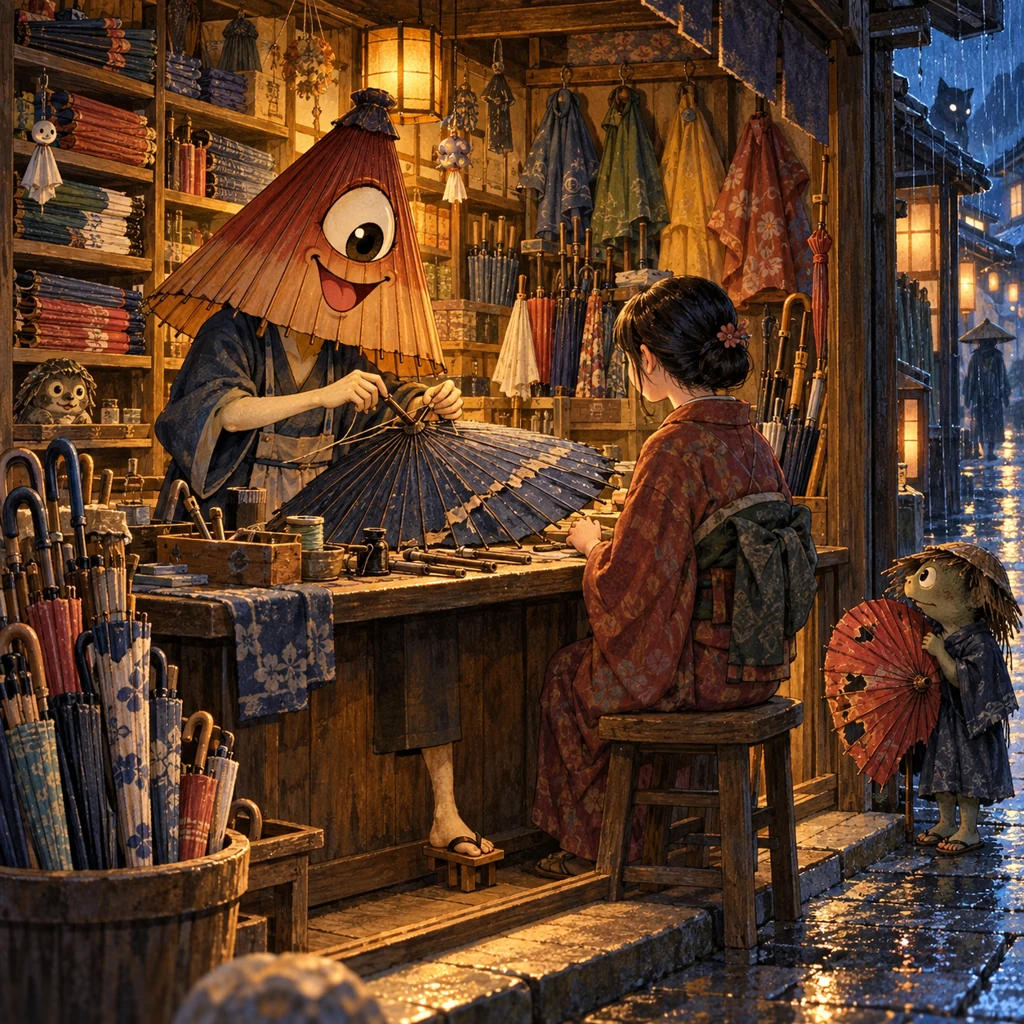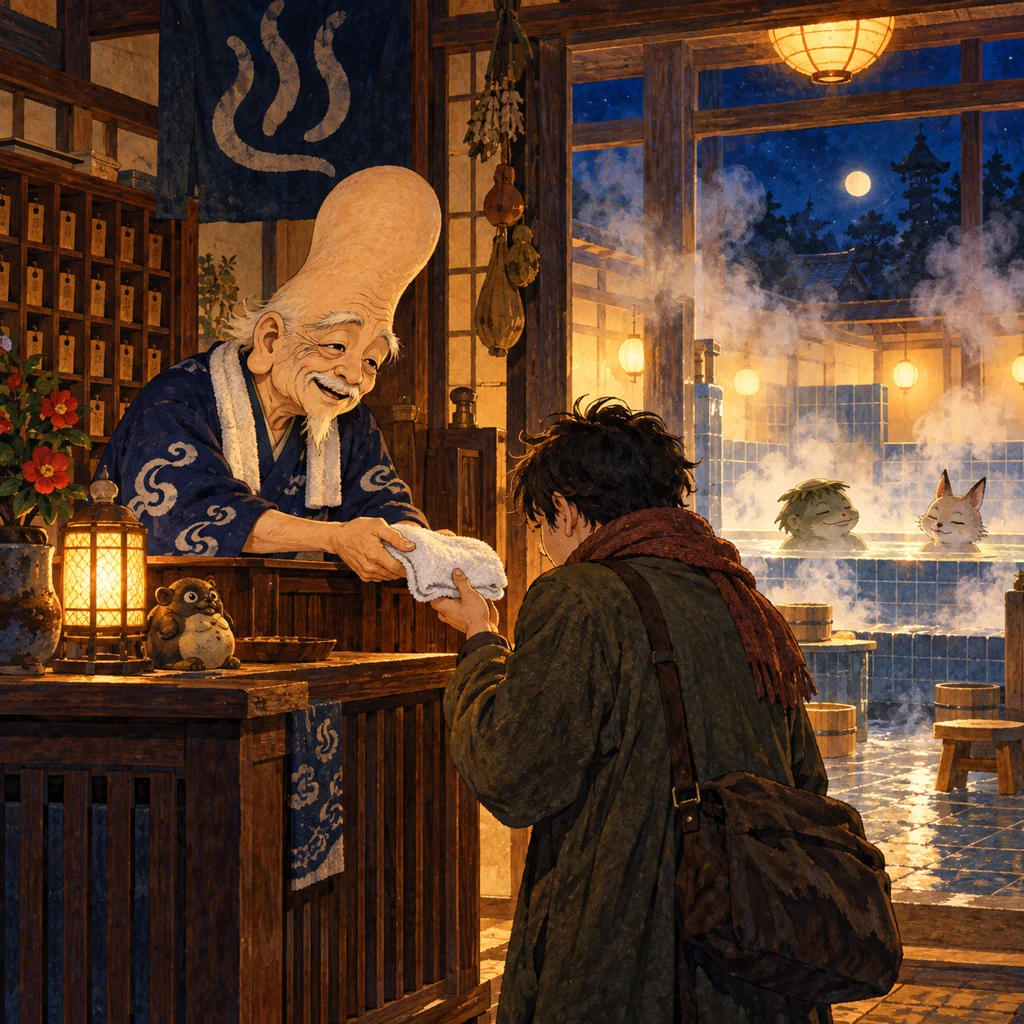
Long ago, there were human shops that kept a light on after dark.
A ramen cook made one last bowl for someone coming home from work. A coffee shop ground beans for a sleepless guest. A rain-goods shop let a passerby wait beneath its eaves.
If someone was still there at closing time, the keeper stayed a little longer.
Nearby, other lives watched: a red lantern under the eaves, a cat at the counter, a tanuki beneath a sake brewery, an old umbrella repaired again and again. The humans did not always notice them. But they remembered how a warm bowl could soften someone's shoulders, and how sitting beside a person could give them room to speak.
The town changed. Keepers grew old, curtains came down, and new roads appeared. Yet the nights spent in those shops did not entirely disappear. Someone still remembered the steam, the coffee, and the light left on for them.
No one knows exactly when Hyakki Shotengai began. Some call it a remnant of an old town. Others say yokai gathered there, one by one, after leaving human shops.
There is, however, a story about one night.
A person stopped on the way home. They had a home to return to. They had not argued with anyone. They simply wanted to sit for a while before opening the front door.
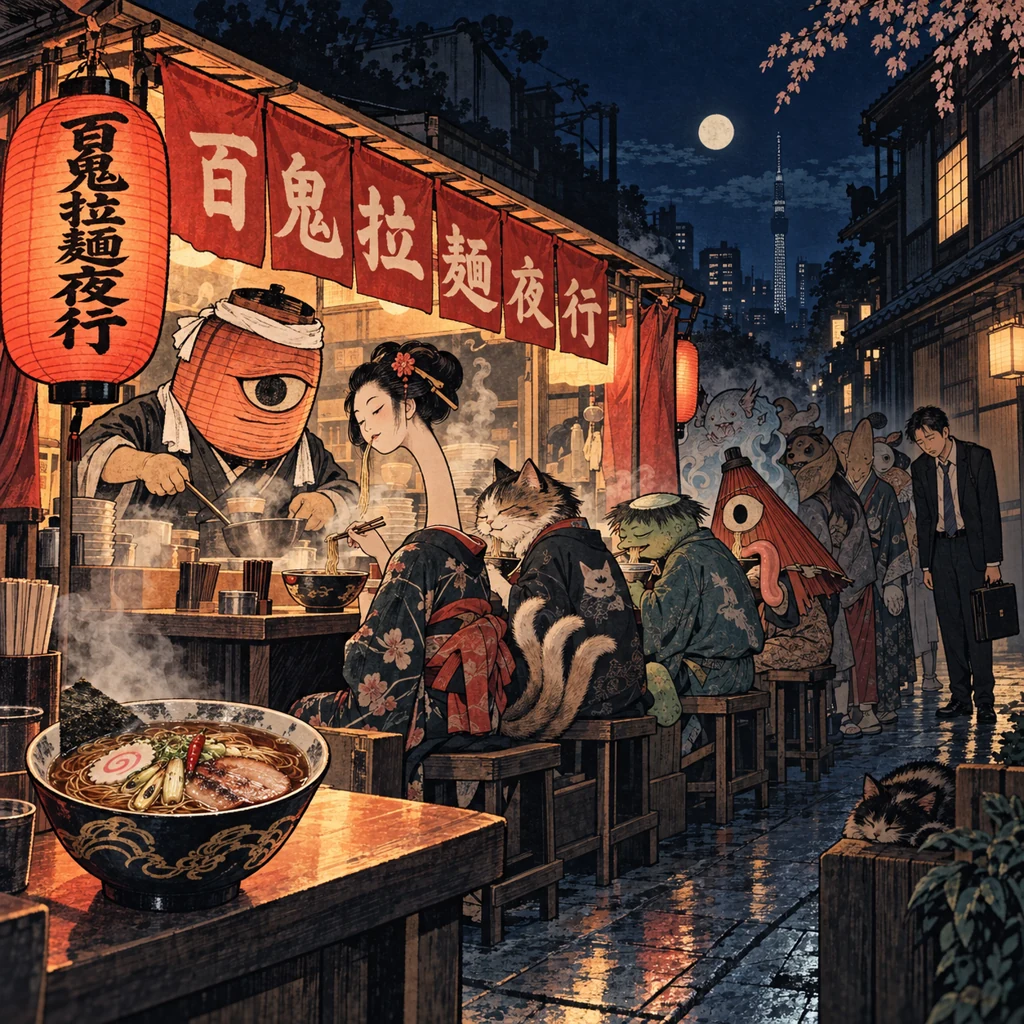
At midnight, a red lantern appeared at the end of an alley that usually ended in a wall. The scent of soy broth drifted out. Behind a stall, a one-eyed lantern spirit set down a bowl.
“What do you want to forget tonight?”
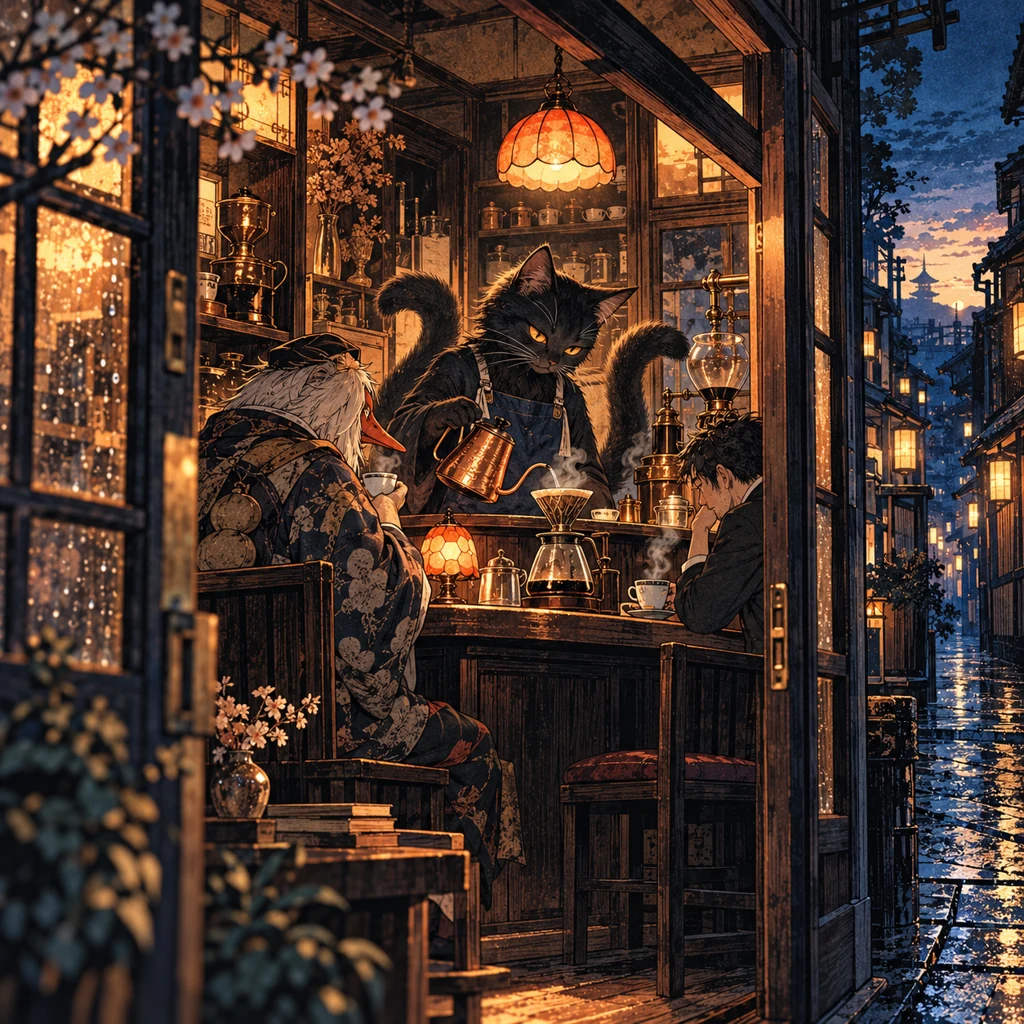
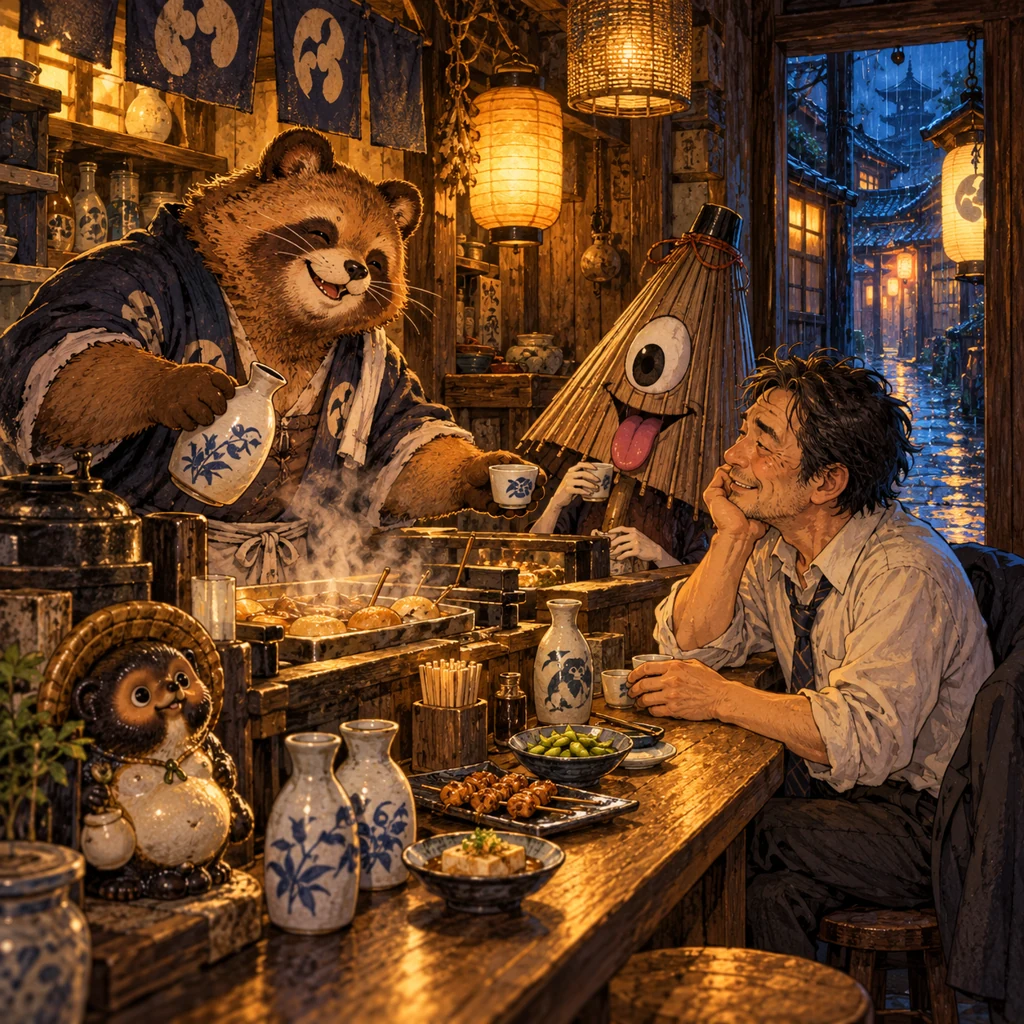
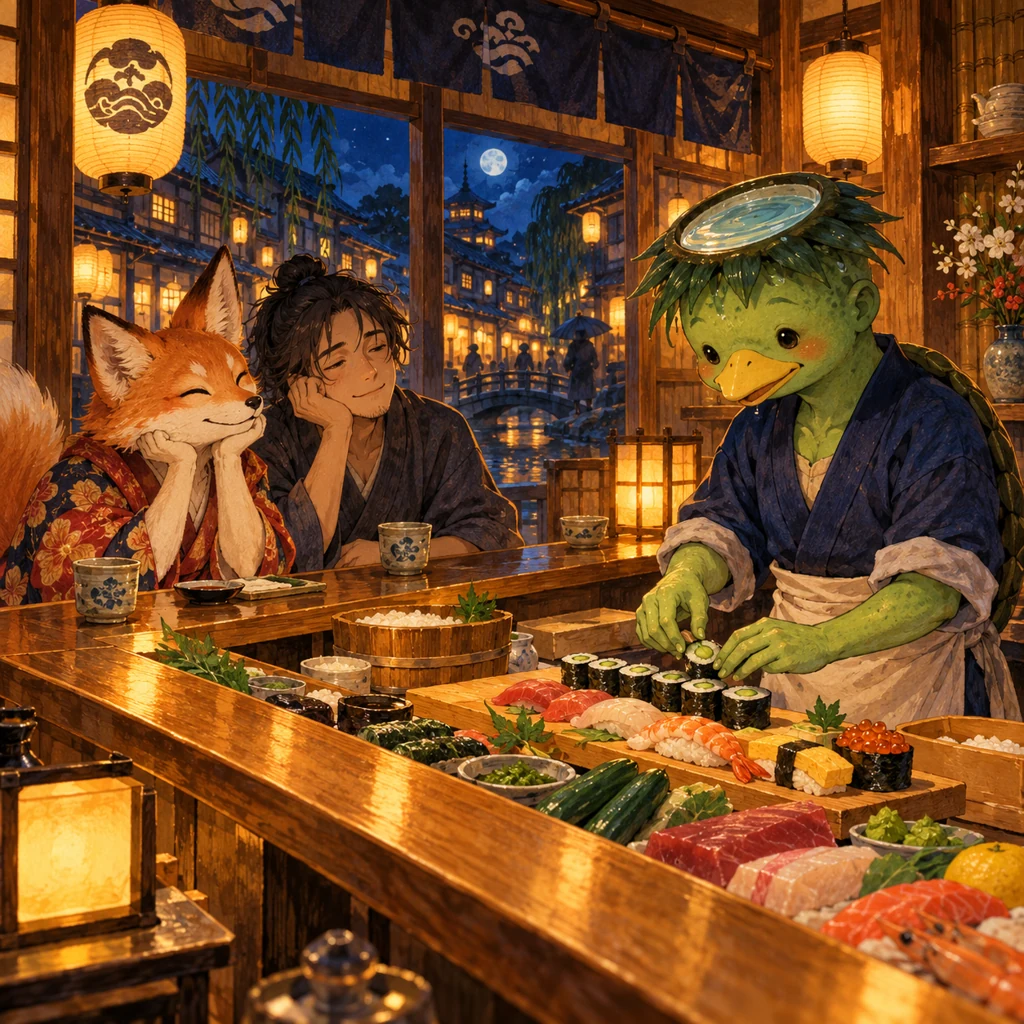
The guest picked up the chopsticks without finding an answer. Nearby, a two-tailed cat ground coffee. Laughter came from a tanuki's bar. A kappa made sushi, and an old umbrella spirit mended a customer's umbrella. At the far end stood a bathhouse chimney.
The guest ate ramen, drank coffee, and took a bath. They never explained what had happened that day. Before they left, Nura-o offered a glass of cool water.
“May I come again?”
“When we're open,” he said.
Before dawn, the guest looked back. The wall was there again. Their troubles had not been settled, but it felt all right not to settle them before morning.
More stories followed. A yokai separated from the Night Parade waited for its companions over tea. A person finishing a night shift ate sushi beside a kappa. Someone with happy news stopped at the tanuki's bar to tell it to another soul.
Guests gave one another seats and dry towels. They, too, began to make the street a welcoming place.
One night, someone hung a little sign at the entrance: Hyakki Shotengai. Whether a human or a yokai painted it is another thing no one remembers.
Today, six shops light up at midnight. Gankichi pulls his stall. Okon polishes the counter. Tokubei prepares the food. Sarakichi fills the dish on his head. Kasanosuke sets out his tools. Nura-o is already at reception.
As dawn approaches, the guests take their own roads home, and the lights go out one by one.
Ask who began the street, and the keepers give different answers. Gankichi says the bathhouse was there when he arrived. Okon says there simply needed to be a place for coffee. Tokubei is called away by another guest before he finishes.
Nura-o pauses to think. But before he remembers, the door opens.
He picks up a fresh towel and welcomes tonight's guest.